

Cart
0


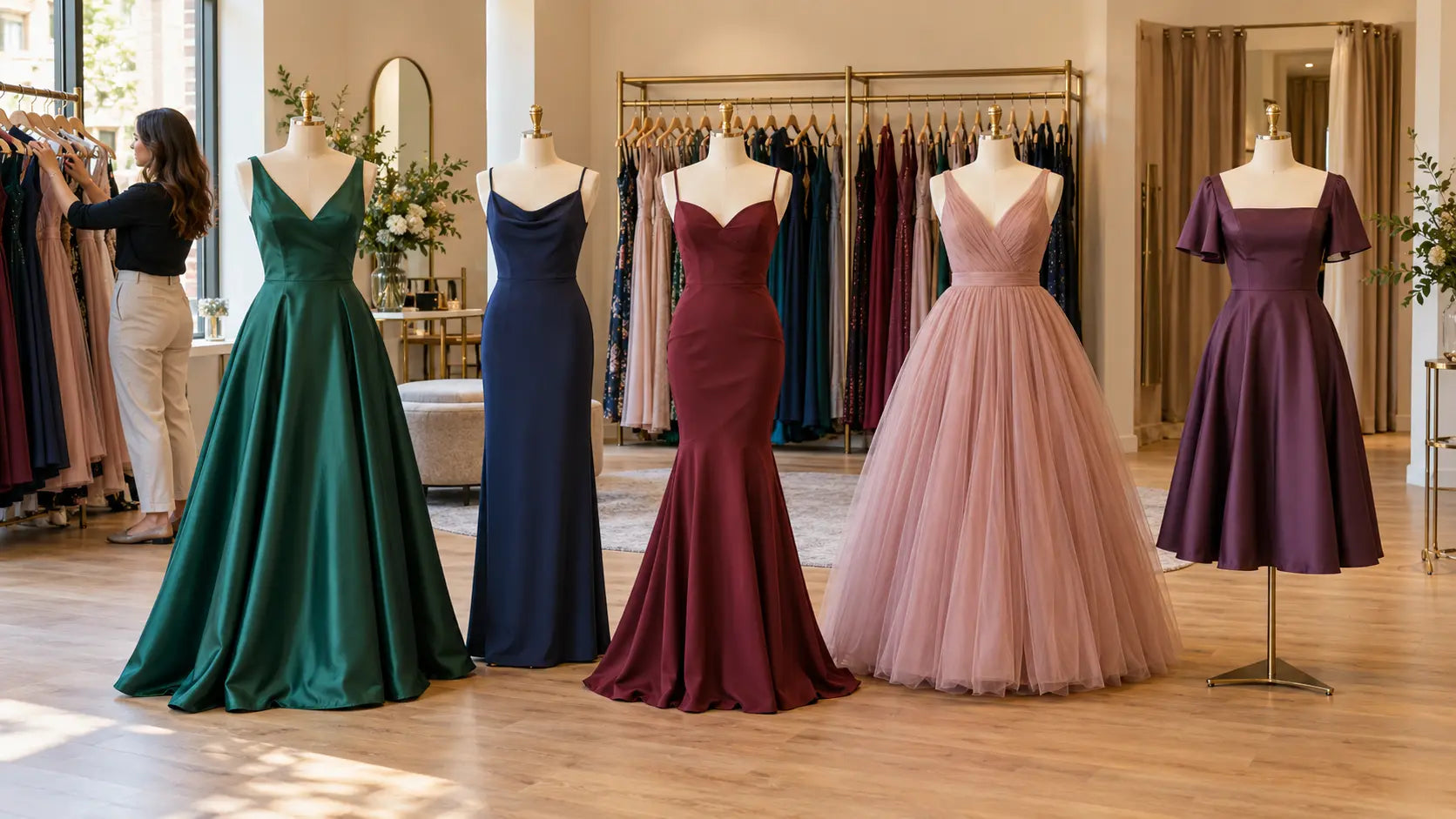
Most new boutiques should open with 30 to 60 formal dress styles. A small or online-first shop can start near 30, while a full-size store with several fitting rooms can carry 50 to 60. Each style needs a short size run of about 4 to 8 pieces. This gives shoppers real choice without locking your cash in dresses that never sell.
That range is a starting point, not a fixed rule. The right number for your store depends on your budget, your floor space, the events your customers shop for, and how fast you can reorder. This guide walks through each of those factors so you can build an opening order that fits your boutique.
Why the Number of Styles Matters So Much
Formal wear is different from everyday clothing. A customer shopping for prom, a quinceañera, or a wedding is buying for one specific day. She wants to try on several options, compare them, and feel sure before she pays. If your racks look thin, she leaves to shop somewhere else.
On the other side, too many styles create a different problem. Every dress you buy is cash sitting on a hanger. Formal dresses also follow seasons. A prom gown that does not sell by May often has to wait almost a full year for the next prom season, or be marked down. New boutiques that overbuy usually run short on money right when they need to reorder their best sellers.
The goal is balance. You want enough variety that most shoppers find two or three dresses worth trying, and few enough styles that you can stock each one properly.
Styles vs SKUs vs Units: Know the Difference
Before you plan your order, it helps to understand three terms that wholesalers and buyers use every day.
A style is one dress design, usually with its own style number from the manufacturer. A SKU is one exact version of that style, such as style 1234 in navy, size 8. A unit is one physical dress.
So if you buy one style in two colors and six sizes, you have 1 style, 12 SKUs, and however many units you ordered. When people ask how many formal dress styles a boutique should carry, they usually mean designs. But your budget is spent on units, so you need to plan both numbers together.
A Simple Starting Guide by Boutique Size
Here is a practical way to size your first order based on the type of shop you are opening.
| Boutique Type | Styles to Start | Units per Style | Rough Opening Units |
|---|---|---|---|
| Small or online-first shop | 25 to 35 | 4 to 5 | 100 to 175 |
| Standard boutique with one or two fitting rooms | 40 to 50 | 5 to 6 | 200 to 300 |
| Larger store serving several occasions | 55 to 70 | 6 to 8 | 330 to 560 |
If your budget sits between two rows, lean toward fewer styles with better depth. A shopper who finds her dress but not her size is just as lost as one who finds nothing she likes.
How to Split Your Styles by Occasion
Not every formal dress serves the same buyer. A smart opening collection is spread across the events your local customers actually attend. Look at your area first. A store near several high schools will lean toward prom. A shop in a community where quinceañeras are common should give ball gowns more room.
Prom and Homecoming
For most new formal boutiques, prom is the largest category. Prom shoppers want options, and they want something no one else at their school is wearing. Plan for roughly 40 to 50 percent of your styles here if you serve a teen market.
Mix long gowns for prom with short and fitted dresses for homecoming. Many boutiques also keep a dress registry by school, where each sold style and color is logged so two girls from the same school do not show up in the same dress. This is a simple tool that builds trust and repeat business.
Quinceañera and Sweet 16
Quinceañera gowns are large, detailed, and often higher priced. They take up more rack space and more of your budget per unit. If your community celebrates quinceañeras, plan for about 10 to 20 percent of your styles here. Stock petticoats as well, since many ball gowns need one for the right shape.
Mother of the Bride and Wedding Guest
This category sells all year, which helps balance the spring rush from prom. Mothers of the bride often want sleeves, jackets, or modest necklines, along with comfortable fabrics they can wear for a long day. Aim for 15 to 20 percent of your styles here.
Evening and Special Occasion
Galas, military balls, award dinners, and holiday parties fill the rest. Simple satin gowns, black dresses, and classic A-line styles fit this group. These dresses also overlap with prom and wedding guest shoppers, so they work hard for you across seasons.
Which Silhouettes and Necklines to Cover
Variety in shape matters more than variety in tiny details. Two dresses with the same cut but different beading feel like the same option to many shoppers. When you pick your first formal dress styles, make sure your racks cover these core shapes:
- A-line, which flatters almost every body type and is the safest base for any collection
- Mermaid or fit-and-flare, a strong seller for prom and evening events
- Ball gown, essential if you serve quinceañera or formal gala shoppers
- Sheath or column, a clean choice for mothers of the bride and evening wear
- Short and cocktail cuts, needed for homecoming and graduation
For necklines, spread your picks across off-the-shoulder, strapless, V-neck, sweetheart, and long-sleeve options. Long sleeves and higher necklines matter more than many new buyers expect. Modest shoppers, older customers, and cooler-season events all depend on them.
How Many Sizes and Colors to Order per Style
Building a Size Run
A size run is the set of sizes you order for one style. For a new boutique, a common approach is to order the middle sizes deeper and the edge sizes lighter. For a style offered in sizes 2 to 16, you might order one each in 2, 4, 14, and 16, and two each in 6 through 12.
Track which sizes sell out first during your opening months. That data is more useful than any general rule, because your local customers decide what your true size curve looks like.
Do Not Skip Plus Sizes
Many new boutiques under-stock plus sizes, and it costs them sales. A 2016 study published in the International Journal of Fashion Design, Technology and Education found that the average American woman wears a size 16 to 18. Yet formal plus-size options are still hard to find in many towns.
Plan for at least 15 to 20 percent of your styles to come in extended sizes. A plus-size shopper who finds several real choices in your store is likely to tell her friends and come back for the next event.
Choosing Colors
Ordering every style in many colors spreads your budget thin. For most styles, one or two colors is enough at launch. Keep black, navy, red, and a soft neutral like champagne or blush in the mix, since these sell across most events. Add one or two trend colors each season, such as dusty blue or sage, but treat them as tests rather than core stock.
How Your Budget Shapes the Number
Your opening budget sets the ceiling. A simple way to work out your style count is to start with money, then divide.
Here is an example. Say you set aside $15,000 for opening formal inventory, and your average wholesale cost is about $90 per dress. That buys around 165 dresses. At 5 units per style, you can carry about 33 styles. If you want 45 styles, you either need a bigger budget, lower average costs, or thinner size runs.
Many boutiques price formal wear at about two to two and a half times the wholesale cost. This covers rent, alterations support, staff, and markdowns. Plan your budget with that markup in mind so the styles you choose can actually earn a profit.
It also helps to keep 20 to 30 percent of your total inventory budget in reserve. Retail buyers call this open-to-buy money. It lets you reorder your best sellers quickly instead of waiting until the season is half over.
When to Place Your Orders
Timing is just as important as quantity. Formal wear runs on a long buying calendar. Most boutiques place prom orders in the late summer and fall for the following spring, often at regional formal wear trade shows or directly through wholesale portals.
Wedding and mother of the bride styles can be ordered more steadily across the year. Quinceañera demand also runs year-round, though it often follows local celebration seasons.
If you open in the fall, focus first on homecoming, holiday, and wedding guest styles, then build your prom collection in the months before spring. If you open in late winter, prom should lead your order.
Common Mistakes New Boutiques Make
Most stocking problems come from a few repeat mistakes. Watching for them early can save a lot of money.
- Buying too many styles with only one or two units each, so shoppers rarely find their size
- Choosing dresses based on the owner's taste instead of what local customers wear
- Skipping plus sizes or long sleeves and losing whole groups of shoppers
- Spending the full budget at once with nothing left to reorder best sellers
- Ordering prom stock too late and missing the busiest months
The fix for most of these is the same. Start a little smaller than you think, track what sells, and reorder with real data.
How to Know If You Stocked the Right Number
After your first season, look at your sell-through rate. This is the number of units sold divided by the number of units you received, shown as a percentage. If you received 200 dresses and sold 130, your sell-through is 65 percent.
Many fashion retailers aim for a sell-through rate somewhere between 60 and 80 percent for a season. If yours is much lower, you likely bought too many styles or too much depth. If it is very high and you ran out of popular sizes early, you probably need more units per style.
Also review sales by category and silhouette. You may find that mermaid gowns sold twice as fast as ball gowns, or that plus sizes sold out first. Use those patterns to shape your next order. Your second season should always be smarter than your first.
Frequently Asked Questions
How many dresses should a new formal boutique start with?
Most new formal boutiques start with 150 to 350 dresses in total. That usually means 30 to 60 styles with 4 to 8 units each. Smaller shops sit at the low end, while stores with more floor space and a larger budget can carry more.
Is it better to stock more styles or more sizes per style?
For a new boutique, depth usually wins. Fewer styles with a full size run turn into more sales than many styles with one dress each. A shopper who loves a dress but cannot find her size will often leave the store without buying anything.
How often should a boutique add new formal dress styles?
Most boutiques add new styles every season, with the biggest update before prom season. Small monthly drops of three to five new styles also keep your racks feeling fresh and give repeat customers a reason to come back and browse again.
Should a new boutique carry plus-size formal dresses?
Yes. Plus-size shoppers are a large part of the market and are often underserved in formal wear. Aim for at least 15 to 20 percent of your styles in extended sizes, and give them the same quality and design choices as standard sizes.
What formal dress styles sell best for new boutiques?
A-line gowns, mermaid gowns, and classic satin dresses tend to sell well across most markets. Off-the-shoulder and long-sleeve options also perform steadily. The best sellers in your store will depend on your local events, so track sales closely from day one.
Building Your First Formal Dress Collection
The right opening order gives shoppers enough choice to feel excited while keeping your cash flexible enough to reorder what works. Start with a clear budget, spread your styles across the events your community celebrates, cover the core silhouettes and plus sizes, and leave room to restock.
If you are sourcing your first collection, May Queen USA offers wholesale prom, homecoming, quinceañera, mother of the bride, wedding, and plus-size formal dresses through its May Queen, Royal Queen Collection, and Layla K labels, with an LA showroom and a retailer program for approved boutiques.
Browsing a single wholesaler with that range makes it easier to build a balanced first collection without juggling too many vendors.


